Relevant Contracts Tax (RCT)
Relevant Contracts Tax (RCT)
Relevant Contracts Tax
If your company is making payments to sub-contractors, and are engaged in the construction, meat or forestry industry then these payments will be subject to authorisation by the Revenue Commissioners.
Principal Tax Number:
Select Tools\Options\Company and enter your Principal Tax Number. This is the registration number supplier by the Revenue Commissioners for your RCT tax registration.
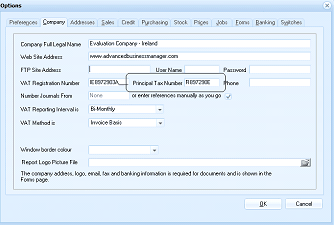
The "Options" dialog window showing the "Company" tab. Multiple tabs are visible at the top: Preferences, Company (selected), Addresses, Sales, Credit, Purchasing, Stock, Pages, Jobs, Forms, Banking, and Switches. The form displays fields for: Company Full Legal Name (showing "Evaluation Company - Ireland"), Web Site Address, FTP Site Address (with User Name and Password fields), VAT Registration Number (showing an Irish VAT number), Principal Tax Number (showing a number labeled for RCT registration), Number Journals From (set to "None" with option to "enter references manually as you go"), VAT Reporting Interval (set to "Bi Monthly"), VAT Method (set to "Invoice Basis"), Window border colour, and Report Logo Picture File. A note at the bottom states the company address, logo, email, fax and banking information is required for documents. OK and Cancel buttons are at the bottom.
Supplier Setup
You will need to indicate that the supplier is a sub-contractor and is subject to RCT rules. See Supplier Accounts - Account Details
Setup RCT
In order to connect to the Revenue Web Service you need to setup you ROS (Revenue Online Service) certificate. Select any supplier that you have setup as RCT rules apply and select the Contracts folder, then select New Contract and select RCT Setup.
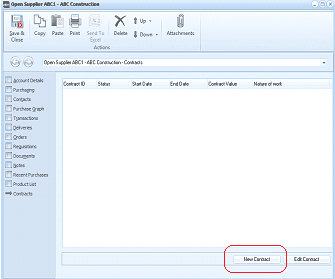
The supplier account window showing the Contracts tab. The left sidebar shows navigation tabs including Account Details, Purchasing, Contacts, Purchase Graph, Transactions, Orders, Deliveries, Requisitions, Documents, Recent Purchases, Product List, and Contracts (currently selected). The main area displays a contracts grid with columns for Contract ID, Status, Start Date, End Date, Contract Value, and Nature of work. The grid is currently empty. At the bottom right are two buttons: "New Contract" (circled/highlighted in red to indicate it should be clicked) and "Edit Contract".
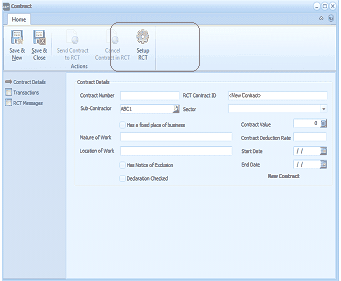
The "Contract" window showing the Contract Details tab. The toolbar at top includes Save & New, Save & Close, Send Contract to RCT, Cancel Contract in RCT, and Setup RCT buttons under "Actions". The left sidebar has tabs for Contract Details, Transactions, and RCT Messages. The main form shows "Contract Details" fields including: Contract Number, RCT Contract ID (showing "New Contract"), Sub-Contractor (showing account code), Sector (dropdown), a "Has a fixed place of business" checkbox, Contract Value (with a monetary field), Nature of Work, Contract Deduction Rate, Location of Work, Start Date, End Date, "Has Notice of Exclusion" checkbox, Declaration Checked checkbox, and a "Base Contract" option.
When you select the RCT setup the following screen will appear.
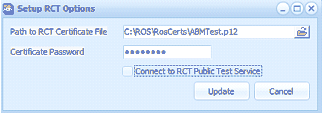
The "Setup RCT Options" dialog box. It contains three fields: "Path to RCT Certificate File" (showing a file path "C:\ROS\RosCerts\ABMTest.p12"), "Certificate Password" (showing masked password characters), and a "Connect to RCT Public Test Service" checkbox (unchecked). At the bottom right are "Update" and "Cancel" buttons. This dialog is used to configure the connection to the Revenue Online Service (ROS) for RCT tax processing.
- Path to RCT: You can browse for the certificate file that you have received from the Revenue Commissioners when you setup your ROS system.
- Certificate Password: Enter the password you use to log onto your ROS system for the certificate selected.
- Connect to RCT Public Test: Do not select this option as this will only be used by the installer of your system to test the connection.
Note: The above information needs to be setup for each user who will be adding or updating contracts or making payments to sub-contractors.
New Contracts:
Once you have signified that the RCT rules apply for the supplier, and you have entered a correct Tax Certificate number, you can now add new contracts for each sub-contractor.
To add a new contract, select the contracts folder on the supplier account, and select New Contract.
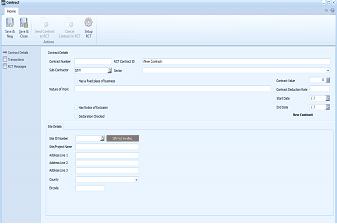
The "Contract" window showing an expanded Contract Details form with site/project information fields. The toolbar includes Save & New, Save & Close, Send Contract to RCT, Cancel Contract in RCT, and Setup RCT buttons. The left sidebar has Contract Details, Transactions, and RCT Messages tabs. The main form shows Contract Details fields at top (Contract Number, RCT Contract ID showing "New Contract", Sub-Contractor, Sector dropdown, "Has a fixed place of business" checkbox, Contract Value, Nature of Work, Contract Deduction Rate, "Has Notice of Exclusion" checkbox, Start Date, End Date, Declaration Checked checkbox, and "Base Contract" option). Below is the Site/Project section with fields for: Site ID Number (SIN Number) with a finder button, Site/Project Name, Address Lines 1-3, County (dropdown), and Eircode. This extended form captures the physical location details of the contract work.
- Contract Number: This is an internal number and you can enter a reference number to identify the contract.
- RCT Contract ID: This will be automatically updated when you synchronise the contract with the ROS system. Note: If you have contracts already setup on the ROS system then you can enter relevant ID that is associated with that contract.
- Sub-Contractor: The sub-contractor's account number will appear here automatically.
- Sector: Select the appropriate industry sector from the drop down list.
- Has fixed place of business: Select this option if the sub-contractor has a fixed business address.
- Contract Value: Enter the value of this contract.
- Nature of Work: Enter the nature of the work being done.
- Start Date: Enter the date when the contract started.
- End Date: Enter the date that the contract is to finish.
- Declaration Checked: Select this item before sending the contract to RCT.
- Site Identification Number (SIN Number): If the contract relates to an existing project then you can use the finder to select and existing SIN number. If you select an existing project then the SIN number field together with the project name and address fields will be automatically populated. However, if the contract relates to a new project then you will need to enter the details as follows:
- Project Name: The name of the project.
- Address Lines 1 to 3 (at least Address line 1 needs to be entered. Address lines 2 and 3 are optional)
- County: The county must be selected from the drop down list.
- Eircode: If you know the Eircode this can be entered here
- When you select Save or select Send Contract to RCT, and if the information is correct, the Revenue Web Service will return the SIN number and update the contract details. The SIN number field will then show SIN Verified
Send Contract to RCT: when you have finished entering all the details you should select Send contract to RCT in order to synchronise with the ROS system.
Save and Close: Select save and close to save the contract details and exit.
Save and New: Select save and new to save the details of the contract and add a new contract.
Viewing Contracts:
If you wish to view details on any contract, then select the appropriate suppler and select the contracts folder. you can then select a particular contract and select Edit Contract
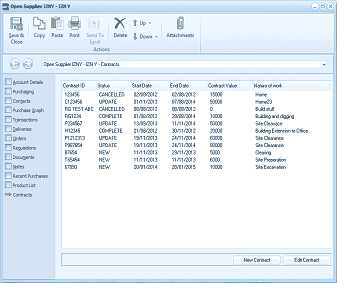
The supplier account window showing the Contracts tab with existing contracts listed. The left sidebar shows navigation tabs with Contracts selected. The main contracts grid displays columns for Contract ID, Status, Start Date, End Date, Contract Value, and Nature of work. Multiple contract records are shown with various statuses including CANCELLED, UPDATE, COMPLETE, and NEW. Contract values and date ranges are displayed for each contract. At the bottom right are "New Contract" and "Edit Contract" buttons.
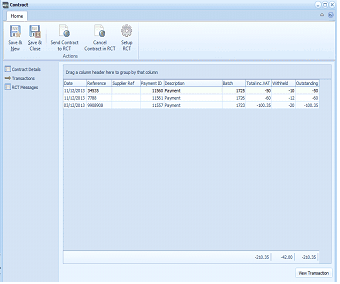
The "Contract" window showing the Transactions tab for a specific contract. The toolbar includes Save & New, Save & Close, Send Contract to RCT, Cancel Contract in RCT, and Setup RCT buttons. The left sidebar shows Contract Details, Transactions (currently selected), and RCT Messages tabs. The main area displays a transaction grid with columns for Date, Reference (Ref), Description/ID, Description, Batch, Balance Amt, Withheld, and Outstanding. Several payment transactions are listed with dates, reference numbers, batch numbers, and monetary amounts showing payments made and tax withheld. Totals are displayed at the bottom of the grid. A "New Transaction" button is at the bottom right.
When you have edited the contract, you can either view the details of the contract, view payments processed for this contract, or view any message received from the Revenue Web Service.
Paying Sub-Contracts:
When you are processing a payment for a sub-contractor, select supplier payments in the normal way (see Supplier Payment ), and select the invoice or invoices you wish to pay (or enter an amount if no specific invoices are being paid). When you select Save and New or Save and Close, then a pop-up screen will appear requesting you to select a contract relating to this payment. Select the relevant contract and select ok. This will then synchronise with the Revenue Web Service and authorise the payment. The Revenue Web Service will advise on the amount of withholding tax if any to be deducted. The amount of withholding tax if any together with the net amount to be paid will be returned to the supplier payments screen and the payment will be processed.