Generating a Purchase Invoice
Generating a Purchase Invoice
The Invoice menu creates an invoice for the selected supplier. You can also create a Purchase Invoice by selecting a previous Requisition, Order or Delivery.
To generate a Purchase Invoice:
-
Select Suppliers to the left of the main screen.
-
In the Purchases menu bar, select Invoice.
When adding a new purchase invoice, the following screen will appear:
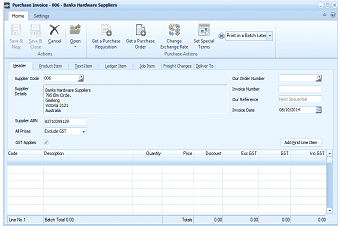
The Purchase Invoice screen in ABM. The title bar reads "Purchase Invoice - 006 - Banks Hardware Suppliers." The toolbar includes buttons for Save & New, Save & Close, Cancel, Open, Get a Purchase Requisition, Get a Purchase Order, Change Exchange Rate, Set Terms, and a Print in a Batch Later option. Below the toolbar are tabs for Header, Product Item, Text Item, Ledger Item, Job Item, Freight Charges, and Deliver To. The Header tab is active, showing fields for Supplier Code (006), Supplier Details (Banks Hardware Suppliers with address in Geelong, Victoria 3121), Supplier ABN, Our Order Number, Invoice Number, Our Reference, Invoice Date (06/10/2014), All Prices (Exclude GST), and a GST Applies checkbox. An "Add First Line Item" button is visible. The lower grid shows columns for Code, Description, Quantity, Price, Discount, Exc GST, GST, and Inc GST with a Batch Total of 0.00.
Purchase Invoices
The Invoice screen contains the following sections:
-
Invoice Header
-
Product Item
-
Text Item
-
Ledger Item
-
Job Item
**Invoice Header ** The first part of generating an invoice is to enter the basic details of the order into the Invoice Header fields. These fields are:
-
Supplier Code: Enter the unique identifying code for the supplier here. Alternatively, press F3 or click the button to the right of the field to select from the supplier list. To create a new supplier account, see Setting up Supplier Accounts.
-
Supplier Details: Enter the name and address of the supplier here, as entered in the set up phase. Supplier details appear here when you enter the supplier code in the previous field.
-
Supplier ABN: Enter the supplier's Tax registration number here (Australia only).
-
All Prices: Click the drop-down list to select an option. If 'Exclude GST/VAT' is selected, then GST/VAT will not be added to all prices entered.
-
GST/VAT Applies: By default, this box is checked, indicating that the order is subject to Tax. If this is not the case, checked the box.
-
Our Order Number: If you are making an invoice from an existing order, then enter the order number or press F3 to select from a list of orders. You can select any number of orders for the invoice. Otherwise it remains set to 'New Order'.
-
Invoice Number: Enter here the supplier's reference number, if any.
-
Our Reference: By default, this is set to 'Next Sequential' and is greyed out.
-
Invoice Date: Enter the date on which the goods are invoiced. Alternatively, press F3 or click the calendar to check the date. By default this field is set to today's date.
-
Add First Line Item: Once all the details have been entered in the above fields, select this option to include product details in the invoice. The details appear on the grid below the field, as they are entered. The totals also appear, so you can see at a glance the running totals for the items.
**Product Item **
-
Product Code: Enter the code of this product for this transaction. Press F3 or click the button to select from the list. If you know the barcode, type the barcode and it will automatically be recognised. By default the quantity is set to first unit of measure in the field to the right. You can select a different unit of measure if more than one unit of measure has been set up for that product. See Setting up a Product Account to set up a new unit of measure for the product.
-
Unit of Measure: You can select the unit of measure that you wish to purchase. If you have three units of measure set up in your product list Each,Box,Carton and you wish to purchase 5 boxes, then select Box as the unit of measure. When you process the invoice and select invoice and deliver all items, the product quantity on hand will be increased by the total number of units. Example: If the Box contains 10 units and you order 5 Boxes, then the total number of units placed in stock will be 50. If you only have one unit of measure set up for the product, then this option will be disabled.
-
Description: Once the product code is entered, the description of the product, as entered in the set up phase appears.
-
Qty. Invoiced: Enter the quantity invoiced at this time. Press F3 or click the calculator to enter the quantity amount.
-
Qty. Delivered: Enter the quantity delivered at this time. Press F3 or click the calculator to enter the quantity amount.
-
Qty. Ordered: Enter the total quantity of this item ordered at this time, including any back order. Press F3 or click the calculator to enter the quantity amount.
-
Location: Enter the start of the location name for this order, press F3 or click the button to select from the list. See Setting up a Stock Location for details on how to place your product in a location.
-
Delivery: Enter the date on which the order is delivered. By default this field is set to today's date. Alternatively, press F3 or click the calendar to select a date.
-
Gross Amount ex. GST/VAT: Enter the unit price of the product excluding Tax. Press F3 or click the calculator to enter the quantity amount.
-
Discount %: Enter the discount rate that applies to this line item, if any. The default discount rate is set at 0.00%. Press F3 or click the calculator to calculate the discount.
-
GST/VAT Code: By default, this box is set at 10% GST/VAT, indicating that the order is subject to Tax of 10%. If this is not the case, select an alternative entry from the drop-down list. To set up a new Tax category, see Setting up a Tax Category.
-
GST/VAT Amount: Enter the Tax amount if different from the calculated figure. Press F3 or click the calculator to enter the amount.
-
Update Selling Prices: Select this option to update and store the selling prices of the selected product based on is new cost.
-
Cancel Item: Warning: Selecting this option cancels the entries made on this section.
-
Serial Numbers/Lot Numbers: If you have selected a product that is serial tracked or lot numbered, select this option to enter the serial numbers or lot numbers for the purchased product. You can automatically increment the serial numbers by selecting the number in sequence if required. There is a Check Box at the bottom to Optimise for Barcode Scanning. Therefore, if you type in a serial number in Search box and select Enter, it will add the serial number when the barcode scanned and will wait for the scanning of the next serial number. Note: The number in sequence in this case will remain at 1 at all times when this check box is selected.
-
Next Item: Once all the details have been entered, select this option to process the entries and add another item to the product line for this invoice, or move on to the next section. Note the details appear in the grid at the bottom of the screen.
**Text Item **
-
Block of Text: You can enter unlimited text to describe a product in more detail. After you have entered your text, select 'Next Item' and the text appears in the 'Description' field of the grid. Note the details appear in the grid at the bottom of the screen.
**Ledger Item **
-
Account Code: Enter the appropriate ledger account code here. Press F3 or click the button to select an account code from the ledger list. See Adding a Ledger Account for details on how to set up a ledger account.
-
Description: The description entered here appears on the printed document and on the ledger account history.
-
Qty. Invoiced: Enter the quantity invoiced at this time. Press F3 or click the calculator to calculate the quantity amount.
Qty. Delivered: Enter the quantity delivered at this time. Press F3 or click the calculator to calculate the quantity amount.
-
Qty. Ordered: Enter the total quantity of this item ordered at this time, including any back order. Press F3 or click the calculator to calculate the quantity amount.
-
Gross Amount ex. GST/VAT: Enter the amount being charged at this time, excluding Tax here. Press F3 or click the calculator to enter the quantity amount.
-
GST/VAT Code: By default, this box is set at 10% GST/VAT, indicating that the order is subject to Tax of 10%. To change the Tax code, select an alternative entry from the drop-down list. To set up a new Tax category, see Setting up a Tax Category.
-
GST/VAT Amount: Enter the Tax amount if different from the calculated figure. Press F3 or click the calculator button to enter the amount.
-
Cancel Item: Warning: Selecting this option cancels the entries made on this section.
-
Next Item: Once all the details have been entered, select this option to add another ledger line item to the grid for this invoice. Note the details appear in grid at the bottom of the screen.
**Job Item **
-
Job Code: Enter the code of the job for this transaction. Press F3 or click the button to select from the drop-down list. To set up a job record, which includes a job code, see Adding Jobs.
-
Stage: Select the stage at which the job is at (if any) by choosing from the drop-down list.
-
Description: Once the job code is entered, the description of the job, as entered in the set up phase appears.
-
Qty. Invoiced: Enter the quantity invoiced at this time. Press F3 or click the calculator to calculate the quantity amount.
-
Qty. Delivered: Enter the quantity delivered at this time. Press F3 or click the calculator to calculate the quantity amount.
-
Qty. Ordered: Enter the total quantity of this item ordered at this time, including any back order. Press F3 or click the calculator to calculate the quantity amount.
-
Cost Centre: Enter the cost centre name here, i.e. Installation. Alternatively, Press F3 or click the button to select from the list. To set up a new cost centre, see Adding Cost Centres.
-
Gross Amount ex. GST/VAT: Enter the amount being charged at this time, excluding Tax here. Press F3 or by select the calculator to enter the quantity amount.
-
GST/VAT Code: By default, this box is set at 10% GST/VAT, indicating that the order is subject to Tax of 10%. If this is not the case, select an alternative entry from the drop-down list. To set up a new Tax category, see Setting up a Tax Category.
-
GST/VAT Amount: Enter the Tax amount if different from the calculated figure. Press F3 or click the calculator to enter the amount.
-
Gross Charge ex. GST/VAT: Enter here the GST/VAT amount if it differs from the calculated figure. Press F3 or click the calculator to enter the amount.
-
Cancel Item: Warning: Selecting this option cancels the entries made on this section.
-
Next Item: Once all the details have been entered, select this option to add another item to the ledger for this invoice. Note the details appear in the grid at the bottom of the screen.
Freight Charges
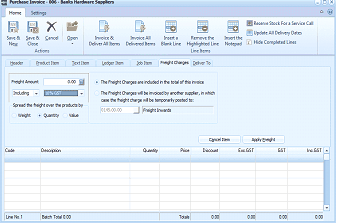
If there is a freight cost associated with getting products from the supplier to your company, then the cost of freight inwards can be added to the unit cost of the products. The value of the freight can be apportioned against all products based on either weight, quantity or value. Note if the freight has already been applied at the delivery stage the further apportionment of freight will not be possible and the options will be disabled.
The Freight Charges tab of the Purchase Invoice screen in ABM. The title bar reads "Purchase Invoice - 006 - Banks Hardware Suppliers." The toolbar shows buttons for Save & New, Save & Close, Cancel, Open, Invoice & Deliver All Items, Invoice All Items, Insert a Blank Line, Remove the Highlighted Line, Insert the Notepad, Reserve Stock for a Service Call, Update All Delivery Dates, and Hide Completed Lines. The Freight Charges tab is selected, showing fields for Freight Amount (0.00), a tax section with "Including" dropdown and tax rate selector, and radio buttons for "Spread the freight over the products by" with choices for Weight, Quantity, and Value. Two radio buttons for posting options: "The freight charges are included in the total of this invoice" and "The freight charges will be invoiced by another supplier, in which case the freight charge will be temporarily posted to" with an account field. Cancel Item and Apply Freight buttons are visible. The lower grid has columns for Code, Description, Quantity, Price, Discount, Exc GST, GST, and Inc GST.
Freight apportionment screen.
Freight Amount: Enter the total cost of freight.
Tax: You can select whether the tax is included, or excluded in the value you have entered. You can also select the applicable Tax rate.
Spread the Freight Amount: Select the method you wish to adopt in order to apportion the freight cost over all the products. This can be by the weight of the products (freight cost divided by total weight multiplied by the product total weight), quantity (freight total cost divided by total quantity multiplied by the quantity on each line) or value (total freight cost divided by total value of all the products multiplied by the value for each product line).
Posting Freight Amount: You can decide how the freight amount will be posted.
-
The freight charges are included in the total of the invoice. If the freight value has been added to the supplier invoice, then select this option.
-
The freight costs will be charged separately. If the freight costs are to be invoiced by another supplier, then select the second option and select a ledger account. The freight amount will then be posted to this account as an accrual awaiting the subsequent invoice to be posted against this account when the actual freight invoice arrives.
-
Apply Freight: When all the selection have been made select Apply Freight and the charges will be apportioned accordingly when the invoice is processed.
Save Settings When you have entered the relevant details, select either: Save and Close: This will save the information and bring you back to the main menu. or: Save and New: This will save the information and open a new 'Purchase Invoices' screen.