Generating a Purchase Order
Generating a Purchase Order
The Order Menu The Order menu creates a purchase order from the selected supplier, and also allows you to view, edit or delete existing orders.
To generate, edit or delete an Order:
-
Select Suppliers to the left of the main screen.
-
In the Purchases menu bar, click the arrow to the right of Order. Select Add New Order.
When adding a new purchase order, the following screen will appear:
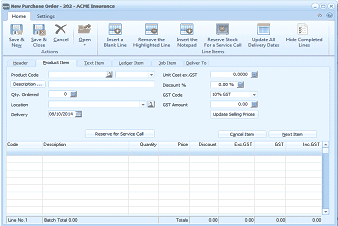
The New Purchase Order screen in ABM. The title bar reads "New Purchase Order - 2012 - ACME Insurance." The toolbar includes buttons for Save & New, Save & Close, Cancel, Open, Insert a Blank Line, Remove the Highlighted Line, Insert the Notepad, Reserve Stock for a Service Call, Update All Delivery Dates, and Hide Completed Lines. Below the toolbar are tabs for Header, Product Item, Text Item, Ledger Item, Job Item, and Deliver To. The Product Item tab is active, showing fields for Product Code, Description, Qty Ordered, Location, Delivery date (08/10/2014), Unit Cost ex GST (0.0000), Discount %, GST Code (10% GST), GST Amount, and an Update Selling Prices button. A "Reserve for Service Call" checkbox, Cancel Item and Next Item buttons are at the bottom. The lower grid shows columns for Code, Description, Quantity, Price, Discount, Exc GST, GST, and Inc GST with a Batch Total of 0.00.
New Purchase Orders
The Order screen contains the following options:
-
Order Header
-
Product Item
-
Text Item
-
Ledger Item
-
Job Item
**Order Header ** The first part of ordering products is to enter the basic details of the order into the 'Order Header' fields. These fields are:
-
Supplier Code: Enter the unique identifying code for the supplier here. Alternatively, press F3 or click the button to the right of the field to select from the supplier list. To create a new supplier account, see Setting up Supplier Accounts.
-
Supplier Details: After you have entered the supplier code, details of the supplier, as entered in the set up phase, appear here automatically.
-
Supplier's ABN: The supplier's ABN (Australia only) is required, or tax has to be withheld.
-
GST/VAT Applies: By default, this box is ticked, indicating that the order is subject to Tax. If this is not the case, untick the box.
-
All Prices: This field specifies if the price is to include or exclude Tax. Select the drop-down list to select an option.
-
Order Number: By default, this is set to 'New Order' and is greyed out.
-
Supplier's Reference: The supplier's reference number, if available, is entered here.
-
Order Date: Enter the date on which the order is made. By default this field is set to today's date. Press F3 or click the button to check the calendar.
-
Suggest Order: Select this option to view a record of products previously purchased from your supplier. It will also give you details on how many of these products you already have in stock. This will help you decide what products to order. Click 'View Product Details' to see whether the product is in stock and at what price it is set. The products listed can be for one specified location or all locations and you can limit the list to a specific product group or product category by selecting a group or category from the drop down list. You have a choice on the method of calculation of the product requirements by selecting either to order up to the maximum stock or basing the requirements on projected sales over a period from 1 day to 1 year.
-
Add First Line Item: Once all the details have been entered, select this option to add details to be included in the order, such as products. The details appear on the grid below the field, as they are entered. The totals also appear, so you can see at a glance the running totals for the order.
**Product Item **
-
Product Code: Enter the code of this product for this sale. Press F3 or click the button to the right of the field to select from the list. If you know the barcode, type the barcode and it will automatically be recognised. By default the quantity is set to first unit of measure in the field to the right. You can select a different unit of measure if more than one unit of measure has been set up for that product. See Setting up Product Accounts to set up a new unit of measure for the product.
-
Unit of Measure: You can select the unit of measure that you wish to purchase. If you have three units of measure set up in your product list, e.g. Each, Box and Carton and you wish to purchase five boxes, then select Box as the unit of measure. When you deliver/invoice the order, the product quantity on hand will be increased by the total number of units. Example: If the Box contains 10 units and you order five boxes, then the total number of units placed in stock will be 50. If you only have one unit of measure set up for the product, then this option will be disabled. The unit of measure displayed will always default to the highest quantity.
-
Description: Once the product code or barcode is entered, the description of the product, as entered in the set up phase appears.
-
Qty. Ordered: Enter the quantity ordered at this time. Press F3 or click the calculator to the right of the field to enter the quantity amount.
-
Location: Select the location from the drop-down list or press F3 or click the button to select from the list. The stock status for each location is displayed showing the free stock and quantity outstanding on supplier orders.
-
Delivery: Enter the date for the expected delivery of the product. By default this field is set to today's date. Alternatively, press F3 or click the calendar to select an alternative date.
-
Unit Cost Amount ex. GST/VAT: Enter the unit cost of the product excluding Tax. The price can be changed by entering a new one, pressing F3 or by clicking the button to select from the list. If the order has been created from a requisition, and the cost prices have increased since the creation of the requisition, then the price will appear in red, and a warning will be displayed.
-
Discount %: Enter the discount rate that applies to this line item, if any. The default discount rate is set at 0.00%. Press F3 or click the calculator to calculate the discount.
-
GST/VAT Code: By default, this box is set at 10% GST/VAT, indicating that the order is subject to Tax of 10%. If this is not the case, select an alternative entry from the drop-down list. To set up a new Tax category, see Setting up a Tax Category.
-
GST/VAT Amount: Enter the Tax amount if different from the calculated figure. Press F3 or click the calculator to enter the amount. To set up a new Tax category, see Setting up a Tax Category.
-
Update Selling Prices: Select this option to update and store the selling prices of the selected product based on is new cost.
-
Cancel Item: Warning: Selecting this option cancels the entries made on this section.
-
Next Item: Once all the details have been entered, select this option to add another product description to the grid for this order. Note the details appear in the grid to the bottom of the screen.
**Text Item **
-
Block of Text: You can enter unlimited text to describe a product in more detail. After you have entered your text, select 'Next Item' and the text appears in the 'Description' field of the grid .Note the details appear in the grid to the bottom of the screen.
**Ledger Item **
-
Account Code: Enter the appropriate ledger account code here. Press F3 or click the button to select an account code from the ledger list. See Adding a Ledger Account for details on how to set up a ledger account.
-
Description: The description entered here appears on the printed document and on the ledger account history.
-
Qty. Ordered: Enter the total quantity of this item ordered, including any back order. Press F3 or click the calculator to enter the quantity amount.
-
Unit Cost ex. GST/VAT: Enter the unit cost of the product excluding Tax. The cost can be changed by entering a new one or by pressing F3 or by clicking the button to select from the list.
-
GST/VAT Code: By default, this box is set at 10% GST/VAT, indicating that the order is subject to Tax of 10%. If this is not the case, select an alternative entry from the drop-down list. To set up a new Tax category, see Setting up a Tax Category.
-
GST/VAT Amount: Enter the Tax amount if different from the calculated figure. Press F3 or click the calculator to the right of the field to enter the amount.
-
Cancel Item: Warning: Selecting this option cancels the entries made on this section.
-
Next Item: Once all the details have been entered, select this option to add another item to the ledger for this order. Note the details appear in the grid to the bottom of the screen.
**Job Item **
-
Job Code: Enter the code of the job for this order. Press F3 or click the button to select from the list. To set up a job record, which includes a job code, see Adding Jobs.
-
Stage: Select the stage at which the job is at (if you have set up any) by choosing from the drop-down list.
-
Description: Once the job code is entered, the description of the job, as entered in the set up phase appears.
-
If you wish to change the description, i.e. ordering goods to be sent direct to the job, type the description of what is being purchased or press F3 to select a description from the product list. The cost price for that product automatically appears in the Unit Cost field if you have selected that product from the product list.
-
Quantity Ordered: Enter the quantity ordered at this time. Press F3 or click the calculator to enter the quantity amount.
-
Delivery Date: Enter the date for the expected delivery to the job. By default this field is set to today's date. Alternatively, press F3 or click the calendar to select an alternative date.
-
Work Type: If you have "Use Work Types" set in Tools\Options then you can select the relevant Work Type from the drop-down list.
-
Cost Centre: Enter the cost centre name here, i.e. Installation. Alternatively, Press F3 or click the button to select from the list. To set up a new cost centre, see Adding Cost Centres.
-
Unit Cost ex. GST/VAT: Enter the cost per unit, excluding Tax here. The cost can be changed by entering a new one or by pressing F3 or by clicking the calculator.
-
GST/VAT Code: By default, this box is set at 10% GST/VAT, indicating that the order is subject to Tax of 10%. If this is not the case, select an alternative entry from the drop-down list. To set up a new Tax category, see Setting up a Tax Category.
-
GST/VAT Amount: Enter the Tax amount if different from the calculated figure. Press F3 or click the calculator to enter the amount.
-
Cancel Item: Warning: Selecting this option cancels the entries made on this section.
-
Next Item: Once all the details have been entered, select this option to add another item to the text line for this order. Note the details appear in the grid to the bottom of the screen.
Save Settings When you have entered the relevant details, select either: Save and Close: This will save the information and bring you back to the main menu. or: Save and New: This will save the order information and open a new 'New Purchase Orders' screen.