Purchase Order Management
Purchase Order Management
Purchase Order Management
The Purchase Order management screen displays a list of orders created for suppliers. The orders can be sorted by Order Date, Delivery Date Promised, Order Number or by Supplier.
Select Suppliers in the Folders list (left of screen) and the second level menu appears underneath.
Select Purchase Orders, and a list of existing orders will appear in the main viewing area (right of screen).
Each order has a flag beside it showing the status of the order.
-
Back Orders not yet due
This signifies that there are back orders on the particular order, however, the due date for delivery is later than the current date.
-
Overdue Back Orders
Orders where back orders exist, and the due delivery date has expired.
-
Overdue Orders:
Orders where nothing has been delivered/invoiced on the order, and the promised delivery date has expired.
-
Needs Invoicing:
The order has been delivered but has not been invoiced yet.
Note: You can sort or filter on the status column so that you can group all like orders together.
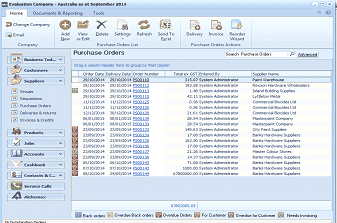
The Purchase Order Management screen in ABM. The title bar reads "Evaluation Company - Australia as at September 2014." The toolbar includes buttons for Email, Add New, Add Via Import, Delete, Settings, Refresh, Send To Excel, Delivery, Invoice, and Reorder. The left panel shows a navigation tree with folders for Business Tool, Suppliers (expanded to show Groups, Purchase Orders, Deliveries & Invoices, and Invoices & Credits), Products, Jobs, Accounts, Cashbook, Contacts & C., Service Calls, and Addresses. The main area shows a "Purchase Orders" list with columns that can be grouped by dragging column headers. The grid displays order data with columns for Order Date, Delivery Date, Order Number, Total, and Supplier Name. Multiple orders are listed from various suppliers such as Sand Building Supplies, Commercial Bottles Ltd, and Banks Hardware Suppliers. Status indicators with colored flags appear next to orders showing states like overdue orders. Filter checkboxes at the bottom include "Back orders," "Overdue Back orders," "Overdue Orders," "For Customer," "Overdue to Invoice," and "Needs Invoicing."
**Maintaining and Processing Orders **
-
Create New Order:
To create a new order, select New from the top menu bar. This will bring up the New Purchase Order screen.
-
Editing an Existing Order:
To edit an existing order select the order and select Open from the top menu bar. This will allow you to amend the details of the order.
-
Deleting an Order:
To delete an order select Delete from the top menu bar. This will remove the selected order. Note: only orders that have not been delivered/invoiced can be deleted.
-
Viewing the Details of the Order:
To see the details on the order select the order on the list and Double Click on that order to see the contents.
-
Convert to Delivery:
If the order is being delivered, select Delivery from the menu bar. This will open the Purchase Delivery program and automatically select that order.
-
Convert to Invoice:
If the order is to be invoiced, then select Invoice from the menu bar. This will open the Purchase Invoice program and automatically select that order.